
Research to Publication: A comprehensive programme that follows the research cycle
Research to Publication takes you through picking a research question to study design, ethical research and publication.
Created by:
BMJ Learning

Every clinical advance begins with a well-formed question, and ends only when that answer reaches the people who can act on it. Yet many talented clinicians and researchers find the journey in between – designing a sound study, navigating ethics approval, analysing data correctly, writing it up, and getting it past peer review – far harder to learn than to do. Weaknesses at any one stage can undermine an otherwise promising piece of work, delay its impact, or keep it from being published at all.
Research to Publication is a comprehensive programme that follows the entire research cycle, from picking a research question and choosing the right study design, through ethical research conduct, to writing and publishing your findings. Delivered as a blend of e-learning and applied, case-based teaching under the guidance of experienced researchers and journal editors, the programme equips healthcare professionals and researchers with the practical, end-to-end skills needed to plan credible studies, avoid common pitfalls, and confidently see their research through to publication.
What you'll learn
After completing this collection you should:
- Develop clear, focused research questions using established criteria (FINER)
- Design and write robust, publishable study protocols
- Choose the most appropriate study design for your research question
- Apply ethical principles and navigate IRB approval and informed consent
- Write research papers using clear, evidence-based, IMRaD-structured writing
- Understand the essentials of designing, running, and reporting a clinical trial
- Navigate journal selection, submission, and the peer review process
- Identify and avoid scientific misconduct, plagiarism, and conflicts of interest
- Write and publish an effective clinical or global health case report
- Build the end-to-end skills to take a research idea from question to published paper
This Course Includes
- Articles & Guides
- Online Assesments
- 24/7 Access
- Certificate of completion
Who is this course for?
This course is specially designed for medical professional including but not limited to:
GPs
Hospital doctors
Specialist nurses
Course Contents
Unit 1: How to develop and report good research questions
Developing a research question for your research project
- Identify and describe the characteristics of a good research question
- Know the three key ingredients for developing a research question
- Name and briefly describe the FINER criteria
- Describe several sources from which good research questions arise
- Draft a one-sentence research question and 1/2 page describing the significance of your research question.
The introduction: presenting the research question
- Understand the purpose of the introduction section
- Report the study's research question, aim, and objectives clearly in the protocol and paper
- Explain what was known and not known about the study's topic and about the specific research question
- Use clear, effective writing to introduce the study
Unit 2: Developing and writing protocols
Important elements of study protocols
- Understand the reasons for writing a study protocol
- Match research questions to appropriate research designs
- Identify the core elements of the study protocol
- Understand the information that needs to be included in each section of the study protocol
Publishing study protocols
- Understand the reasons for publishing study protocols
- Identify the difference between study protocols and published protocols
- Understand some of the publishers' requirements for publishing protocols
Clinical trial protocols: how to write and publish them
- Understand the importance and limitations of trial registration
- Choose the correct guideline for writing a study protocol for a clinical trial
- Understand the key features of ICH GCP E6 and SPIRIT guidelines for reporting clinical trial protocols
- Prepare a real clinical trial protocol for publication in a journal
How to write a research protocol for a grant application
- Understand when a research grant is needed
- Know how to prepare a grant application
- Understand the principles of grant review
- Appreciate why a research plan for funding must be based on a high quality study protocol
- Understand the principles of writing plain English summaries for research funding applications
Good medical writing
- Know how to tell the story of the study using IMRaD format
- Understand how to use structure, style, and language to write well
- Understand writing in an evidence-based style
- Know what is meant by "house style" at journals
- Know how to use templates to facilitate writing and submission
- Understand the guidelines regarding the use of artificial intelligence in academic writing, and the use of professional medical writing services and translation services
Choosing and citing references
- Know how to search published literature for appropriate references
- Know how to pick and read relevant references to support key statements
- Be able to cite accurately and fully, avoiding plagiarism
- Know to beware of web references
- Know how to ignore or contest journal requests for "self citation"
- Be able to follow journal advice, using Vancouver or Harvard style
Unit 3: Choosing the best study design
Observational Studies
- Define cohort studies
- Distinguish between prospective and retrospective cohorts
- Explain the nested case-control design and strategy
- Describe the multiple-cohort design
- Define cross-sectional studies
- Explain why cross-sectional studies yield weaker evidence for causality than cohort studies
- Define case-control studies and their benefits and problems
- Describe case-crossover studies.
Randomized Blinded Trials
- Define randomized blinded trials
- Explain how to design RBTs
- Describe how to choose the intervention and control conditions
- Describe how to define outcomes and adverse effects
- Describe how to select participants
- Describe how to measure baseline and outcome variables
- Evaluate approaches to randomizing and blinding.
Studies of medical tests
- Understand the definition of studies of medical tests and how these studies differ from therapeutic intervention trials or studies to assess causality
- Explain how to select subjects for a study of a medical test
- Understand how to measure reproducibility of a test including use of kappa and the coefficient of variation
- Define key metrics to use in studies that assess the accuracy of a diagnostic test including sensitivity, specificity, predictive value, ROC curves, and likelihood ratios
- Understand how to design studies of clinical prediction rules and the associated limitations and challenges with this design.
Enhancing causal inference
- Describe cause-effect relationships and enumerate the four rival explanations
- Identify ways to minimize chance
- Discuss bias and identify ways to avoid bias
- Identify ways to make confounding less likely
- Offer several suggestions or strategies for incorporating opportunistic observational designs
- Explain how causal inference can be enhanced by positive evidence.
The methods: matching study designs to research questions
- Why the methods section is the most important part
- How to report study methods accurately and fully
- How to report methods to minimise bias and confounding
- How to use reporting guidelines for different study types.
Subjects and variables
- Define sample and population, and describe how sample and population inform all clinical research
- Identify criteria for a target population
- Compare and contrast approaches to sampling
- Describe several strategies for recruiting a sample of subjects.
Sample size and power
- List the steps for estimating sample size for an analytic study
- Explain other considerations in calculating sample size for analytic studies
- List the steps for estimating sample size for descriptive studies
- Identify strategies to minimize the required sample size
- Explain other strategies for estimating sample size when there is insufficient information
Statistics
- Define and describe box models
- Define and describe standard error
- Define and describe p-values
- Define null hypothesis
- Select the appropriate statistical tests for your study.
Questionnaires and qualitative research
- Describe steps an investigator can take to ensure that questionnaires and interviews are as valid and reproducible as possible
- Define open-ended questions and closed-ended questions and devise several examples of both types of questions
- Identify desirable question elements as well as pitfalls to avoid
- Design a one-page instrument that is easy to read, easy to understand, and suitable for data entry.
Unit 4: How to do ethical research
Ethical considerations in research
- Discuss a brief history of research oversight
- Review ethical principles and federal regulations
- Explain institutional review board (IRB) approval
- Define informed consent
- Discuss scientific misconduct, authorship, conflicts of interest, and ethical issues in specific types of research.
History of research ethics
- Identify the ethical code of principles for clinical research that has been adapted worldwide
- Describe 3 key principles of clinical research identified in the Nuremberg Code
- List the 4 ethical principles included in the 1964 Declaration of Helsinki (beyond the Nuremberg Code)
- Describe what the 1966 NIH Ethical Review Policies obligated US research institutions to develop and institute.
Institutional review board (IRB) and informed consent
- Discuss which types of clinical studies need institutional review board approval.
- List 5 purposes of informed consent
- Discuss how the Facebook case used or did not use the informed consent process
- Discuss current problems with informed consent process and forms
- Discuss 3 common misconceptions that participants may have even after the completing informed consent process
- Discuss 3 different types of informed consent that might be used for studies with genetic materials.
Ethics aspects of study methods
- Why and how ethics issues can affect study methods
- How international guidelines on research ethics can affect study methods
- How to report ethics aspects in the methods section of a research paper
- Why medical journals mandate prospective registration of clinical trials, protection of patient confidentiality, and other ethics issues that affect study methods.
Data and safety monitoring
- Identify potential safety issues related to your study
- List at least three important duties of a quality control coordinator and/or data and safety monitor
- Describe the function and operation of a Data and Safety Monitoring Board (DSMB).
Principles of research ethics
- Describe 4 ethical principles for clinical trials
- List 3 ethical principles that were violated during the Tuskegee Study.
- Describe issues of beneficence in the TGN 1412 Study.
Ethics in Big data research
- List the four core values that are at stake in Big Data Research
- List 7 fields of study included in Big Data Research
- Discuss researchers' ethical obligations regarding the return of results to participants
- Describe the Ten Simple Rules regarding responsible conduct of research in your country.
Research in resource-poor environments
- Explain why use of placebos in clinical trials may be unethical in developing countries
- Discuss issues related to provision of background and ancillary care, informed consent, access to the study intervention after the trial, and collaboration with host-country stakeholders.
Unit 5: How to write a research paper
Reporting statistical methods and analyses
- Know what to report in the methods section of your paper based on the study design
- Use various reporting guidelines to structure the methods section of your paper
- Better understand journal resources and policies on statistical methods
- Be able to learn from examples of good reporting
The results: reporting all findings succinctly
- Know why the results section is less important than you think
- Know how to report study results accurately and fully
- Understand the pitfalls of reporting results on associations and risks
- Know how to use reporting guidelines for the results of different study types
- Understand using tables, figures and supplemental files
- Know the options for data sharing
Scientific transparency: the pitfalls of selective reporting
- Understand the purpose of the discussion section
- Understand the elements of a structured discussion
- Appreciate the need for a balanced, self critical discussion
- Discuss the results of "negative studies" and observational studies
- Explain what was known, and what the study's results add
- Know how to use evidence based, effective writing to interpret the results and recommend next steps
The discussion: using structure and balance
- Understand the purpose of the discussion section
- Understand the elements of a structured discussion
- Appreciate the need for a balanced, self-critical discussion
- Discuss the results of "negative studies" and observational studies
- Explain what was known, and what the study's results add
- Know how to use evidence-based, effective writing to interpret the results and recommend next steps
Optimising the abstract and title
- Understand why abstracts of research papers must be accurate and clear
- Know how to use international, evidence-based guidelines on preparing abstracts for different study designs
- Know how to report the PICO elements of a study in the abstract
- Know how to write an informative, effective title for a research paper
Unit 6: The essentials of running a clinical trial
Course overview and trial designs
- Define randomized controlled trial
- Identify three alternative study designs to randomized controlled trials
- Identify five reasons for not conducting randomized controlled clinical trials
- Identify four reasons for conducting randomized controlled clinical trials
- Describe four randomized trial designs.
Selection of participants
- Explain why it is important to develop detailed and specific eligibility criteria in a clinical trial
- Describe advantages and disadvantages of defining a broader versus narrower population in a trial
- Describe at least three appropriate reasons for excluding participants from a clinical trial.
Recruitment
- Describe two goals of recruitment
- Identify two study design issues
- Identify three strategies to recruit appropriately
- Identify four recruitment methods.
Choosing the interventions and controls
- Describe aspects of the experimental intervention that should be defined in the planning stages of a trial
- Identify at least three important functions of a control or comparator intervention in a trial
- Assess the strengths and weaknesses of common controls for pharmacologic, surgical, or behavioral interventions.
Randomization
- Describe the importance of randomization in clinical trials
- Describe simple randomization
- Describe randomized permuted blocks.
Blinding
- Define blinding and identify ways to blind many interventions
- Identify three ways that blinding minimizes potential bias for
- Identify four types of interventions that cannot be blinded
- Describe strategies to implement if the study cannot be blinded.
Outcome measures
- Describe at least two reasons for using one primary outcome
- Identify two types of data that support that a measure is a 'valid' surrogate marker for treatment
- Identify the main criterion for determining whether a marker is a valid 'surrogate' endpoint
- Describe two pros and cons for using composite outcomes.
Assessing safety
- Define a serious adverse event
- Describe one pro and con of elicited vs volunteered adverse events
- Describe reasons for using a formal adjudication process for clinical outcomes
- Identify one disadvantage of adjudication.
Adherence and complete follow up
- Describe two important reasons for adherence to the protocol
- Describe five ways that adherence can be measured
- Identify two ways to maximize adherence to the protocol
- Identify four ways to maximize follow up
- Describe three analytic techniques to use for poor compliance during a trial
- Describe two effects of non-adherence.
Ethical issues in clinical trials
- Identify ethical issues in clinical trials
- Describe factors for acceptability of random assignment to a treatment
- Define interim monitoring
- Describe two basic goals of interim monitoring in a blinded trial
- List four reasons to stop a trial early
- List four components of a data monitoring plan
- Describe conflict of interest issues in clinical trials
- Describe three ways of performing scientific misconduct
- Define contributions needed to qualify as an author on manuscript.
Regulatory issues
- Define regulations that apply to clinical trials
- Describe good clinical practice.
How to write up industry-sponsored trials
- The evidence on misreporting of industry trials
- Potential pitfalls of using composite end points in trials
- Reporting of authorship for industry studies
- How to report industry trials transparently
- Good publication practice (GPP3) for industry studies.
Unit 7: Picking the right journal and getting published
Navigating journal and peer review processes
- Know the key points to consider when choosing a journal
- Know what the term "indexed journal" means
- Understand measures of impact, particularly journal impact factor
- Know the typical peer review process and how journals try to minimise bias in this process
- Know the typical peer review process
- Know how to avoid predatory journals
Compliance with journal and ICMJE requirements
- Understand why journals vary widely and have different editorial policies
- Know the core requirements for all medical journals
- Know the Recommendations for the Conduct, Reporting, Editing and Publication of Scholarly Work in Medical Journals from the International Committee of Medical Journal Editors (ICMJE)
- Understand the importance of key ICMJE policies (on authorship, conflicts of interest, clinical trial transparency)
- Know the overview of the authorship rules and the role of the corresponding author
- List examples of specific journal policies eg The BMJ's patient review of research.
Patients' and participants' consent for publication
- Know why consent to publication about potentially identifiable living patients matters
- Understand the circumstances in which journals need such consent to publication
- Know how journals handle consent, and what they do when consent is unavailable or privacy is breached
- Know the policies, regulations, and laws that protect study participants' privacy
Surviving peer review
- Know how to submit an article
- Understand the typical author journey through the peer review process
- Know the roles and responsibilities of authors, editors, and reviewers during peer review
- Understand why ORCID (Open Researcher and Contributor ID) is useful
- Know what peer reviewers do
- Know how to respond to comments and revise the manuscript
- Know what happens after manuscript acceptance
- Know how to approve proofs
- Understand how to work with media and use social media to disseminate research
- Know when to respond to post publication peer review
What to do with rejections and appeals
- Know why journals reject research
- Understand evidence on what might lead to rejection
- Know how to interpret rejection letters
- Know what to do after rejection
- Understand waste in research and how to avoid it
- Know when and how to appeal against rejection
Presubmission inquiries and cover letters
- Understand why a presubmission inquiry can increase the efficiency and success of peer review for both authors and editors
- Know when to make a presubmission inquiry
- Know the key elements of a presubmission inquiry
- Know how to write the cover letter when submitting research
- Know when and how to disclose overlapping and prior publication
- Know when and how to request fast track peer review
Unit 8: Avoiding scientific misconduct
Scientific misconduct, authorship and conflict of interest
- Describe the purpose of and criteria for authorship
- Explain how disputes over authorship might be prevented and/or resolved
- Define conflicts of interest
- Discuss how failure of reproducibility may indicate scientific misconduct
- Discuss how research misconduct may introduce bias into the research findings.
Reporting conflicts of interest
- Why it is necessary to declare conflicts of interest (COI)
- Definitions of COI
- Potential COI in health services research
- Potential COI in industry-sponsored research
- Public reporting of industry payments to health professionals
- Handling COI for other types of journal article
- Potential COI for editors, journals, and publishers.
Journal rules on authorship
- Authorship: how it is defined, and why it matters
- How MEDLINE and journals list authors
- Journal policies and practices to safeguard authorship
- Guest, gift, and ghost authors and other authorship problems
- Attribution for shared datasets.
How and why to avoid plagiarism
- How plagiarism and text recycling are defined
- How common plagiarism is
- Factors associated with plagiarism
- Use of plagiarism detection tools by publishers
- How to avoid plagiarism and how to respond if caught.
How journals uncover scientific fraud
- Scientific fraud as data fabrication and deliberate falsification
- The extent and harms of scientific fraud
- Techniques journals may use to uncover fraud: statistical analysis, image checking, linguistic analysis, investigative journalism, peer review (pre- and post-publication), data sharing.
- Barriers to tackling fraud
- Principles of research integrity.
How journals act on scientific misconduct
- How and why journals respond to suspected misconduct that relates to submitted and published articles
- The role of the Committee on Publication Ethics (COPE)
- The roles of authors' institutions and research integrity organisations in investigating possible misconduct
- Reasons for, and impacts of, retractions in biomedical and health research
- How MEDLINE corrects the literature.
Unit 9: From patient to publication: How to write a case report
From patient to publication: How to write a clinical case report
- Be able to describe why you have selected your patient for your clinical case report
- Know how to identify the learning points of your clinical case report
- Know how to explain the importance of obtaining accurate clinical information from your patient as you write the first draft of your manuscript, when you revise, and as you publish the final version
- Understand the importance and process of obtaining informed consent and anonymising patient information
- Be able to identify relevant clinical information that should be included in a case report and how to effectively present this information in your case report
- Know how to perform a focussed but comprehensive literature search and describe how you performed your literature search
- Know how to consider using images in as an alternative format for writing a case report
- Be able to use images, videos, diagrams, and illustrations in place of words to convey important information.
From patient to publication: How to write a global health case report
- Know how to write a clinical history of the patient including the social and environmental determinants of their health
- Be able to explain barriers in access to healthcare for your patient
- Know how to analyse global health problems as they affect your patient.
Eligibility
Applicants must hold an MBBS degree as the minimum requirement for course intake.
Examination Pattern
Online evaluation based on Multiple Choice Questions.
Have Questions? Ask us Now!
If you need any clarification before enrolling in this course, please fill out the form below and we’ll get in touch with you shortly
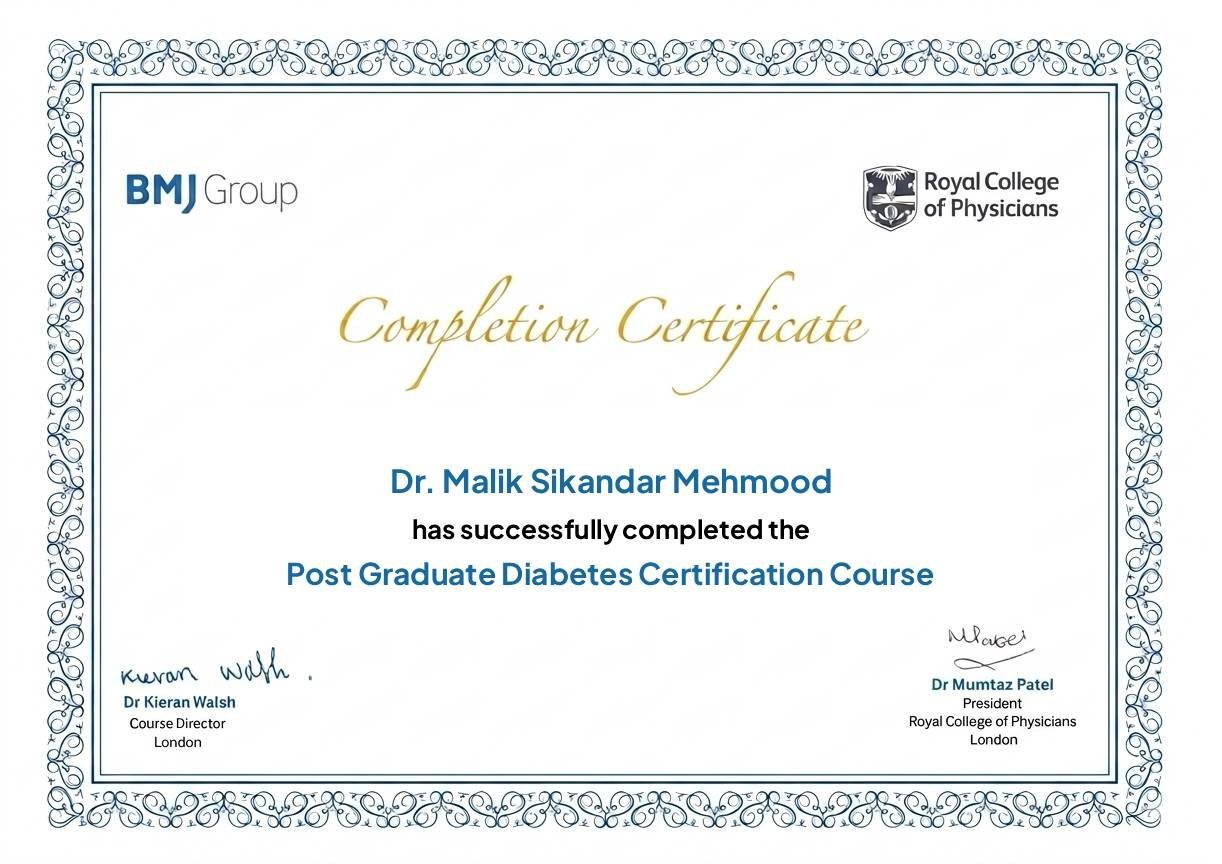
Get certified and get ahead in your career
Start Learning today and get a verified shareable certificate on course completion to showcase your skills & expertise.
Get Started Now
Start Learning today and get a verified shareable certificate
on course completion to showcase your skills & expertise.