
Primary Care Rheumatic and Musculoskeletal Medicine
Practical rheumatology training for South Asian primary healthcare professionals.
Created by:
BMJ Learning

What you'll learn
After completing this course, you should be able to:
- Recognise and manage common rheumatic and musculoskeletal disorders in primary care
- Identify early signs of inflammatory arthritis and connective tissue diseases
- Confidently assess patients with joint pain, back pain, and soft tissue rheumatism
- Apply evidence-based approaches for diagnosing and managing osteoporosis and gout
- Recognise rheumatologic emergencies requiring urgent referral and treatment
- Understand the musculoskeletal effects of conditions such as diabetes, hypothyroidism, and vitamin D deficiency
- Improve referral decisions and long-term coordination with rheumatology specialists
- Deliver safer, patient-centered musculoskeletal care in everyday clinical practice
This Course Includes
- Articles & Guides
- Online Assesments
- 24/7 Access
- Certificate of completion
Who is this course for?
This course is specially designed for medical professional including but not limited to:
GPs
Hospital doctors
Specialist nurses
Family Medicine Trainees
What you'll learn?
This course provides practical, evidence-based training in the diagnosis and management of common rheumatic and musculoskeletal disorders seen in primary care. Participants will develop confidence in recognising inflammatory and non-inflammatory conditions, managing common musculoskeletal complaints, and identifying cases requiring urgent specialist referral. The curriculum is specially designed for South Asian clinical practice and focuses on improving patient-centered care through early diagnosis and effective management.
Unit 1 - Introduction to rheumatology
- Module 1. Introduction to Rheumatic disorders
- Module 2. Anatomy of joints and immune system
- Module 3. Pathogenesis of rheumatic diseases
- Module 4. Clinical spectrum of rheumatological disorders
- Module 5. Approach to common rheumatic diseases
Unit 2 - Diagnosis and assessment of rheumatic diseases
- Module 1. Classification / Diagnostic criteria
- Module 2. History taking & Musculoskeletal examination
- Module 3. How to diagnose Rheumatic disease - laboratory investigations
- Module 4. Imaging in rheumatology
- Module 5. Disease assessment
- Module 6. Biomarkers
Unit 3 - Management of rheumatic diseases
- Module 1. Rationale and safe use of NSAIDs
- Module 2. Conventional synthetic disease-modifying antirheumatic drugs
- Module 3. Dos and DONTs for Biologicals treated patients
- Module 4. Rationale use of steroids
- Module 5. Second line immune suppressants -When to refer
- Module 6. An overview of Small molecules
- Module 7. Vaccinations in Rheumatology
- Module 8. Dietary & Lifestyle modifications relevant to rheumatic diseases
- Module 9. Patient Education & Psychosocial support in Rheumatology
- Module 10. Allied health sciences in Rheumatology (Physiotherapy and Occupational therapy)
Unit 4 - Approach to diagnosis and management of inflammatory arthropathies
- Module 1. Clinical approach to a patient with joint syndromes
- Module 2. Rheumatoid arthritis and early arthritis
- Module 3. Psoriatic arthritis
- Module 4. Spondyloarthritis
- Module 5. Osteoarthritis
- Module 6. Septic and other infective arthropathies
- Module 7. Impact of co-existing infections in rheumatic diseases
- Module 8. Pearls for diagnosis and management of gout and other arthropathies
Unit 5 - Approach to diagnosis and management of connective tissue diseases
- Module 1. SLE and antiphospholipid syndrome
- Module 2. Sjogren's syndrome
- Module 3. Systemic sclerosis (scleroderma)
- Module 4. Myositis
- Module 5. MCTD, overlaps, and undifferentiated connective tissue disease
Unit 6 - Other rheumatological conditions
- Module 1. The role of vitamin D in health and disease: a brief review
- Module 2. Other endocrine/metabolic syndromes with rheumatic manifestations (hypothyroidism and diabetes)
- Module 3. Chronic pain syndromes
- Module 4. Soft tissue rheumatism
- Module 5. Evaluation of low back ache and neck pain
- Module 6. Hypermobility disorders
- Module 7. Vasculitis in primary care
- Module 8. Rheumatological emergencies
- Module 9. Outcome measures in rheumatology
- Module 10. Pregnancy and lactation with rheumatic diseases
- Module 11. Systemic manifestations of rheumatic diseases and rheumatic manifestations of systemic diseases
- Module 12. Pregnancy and lactation with Rheumatic diseases
- Module 13. Systemic manifestations of rheumatic diseases & Rheumatic manifestations of systemic diseases
Eligibility
Applicants must hold an MBBS degree as the minimum requirement for course intake.
Examination Pattern
Online evaluation based on Multiple Choice Questions.
Have Questions? Ask us Now!
If you need any clarification before enrolling in this course, please fill out the form below and we’ll get in touch with you shortly
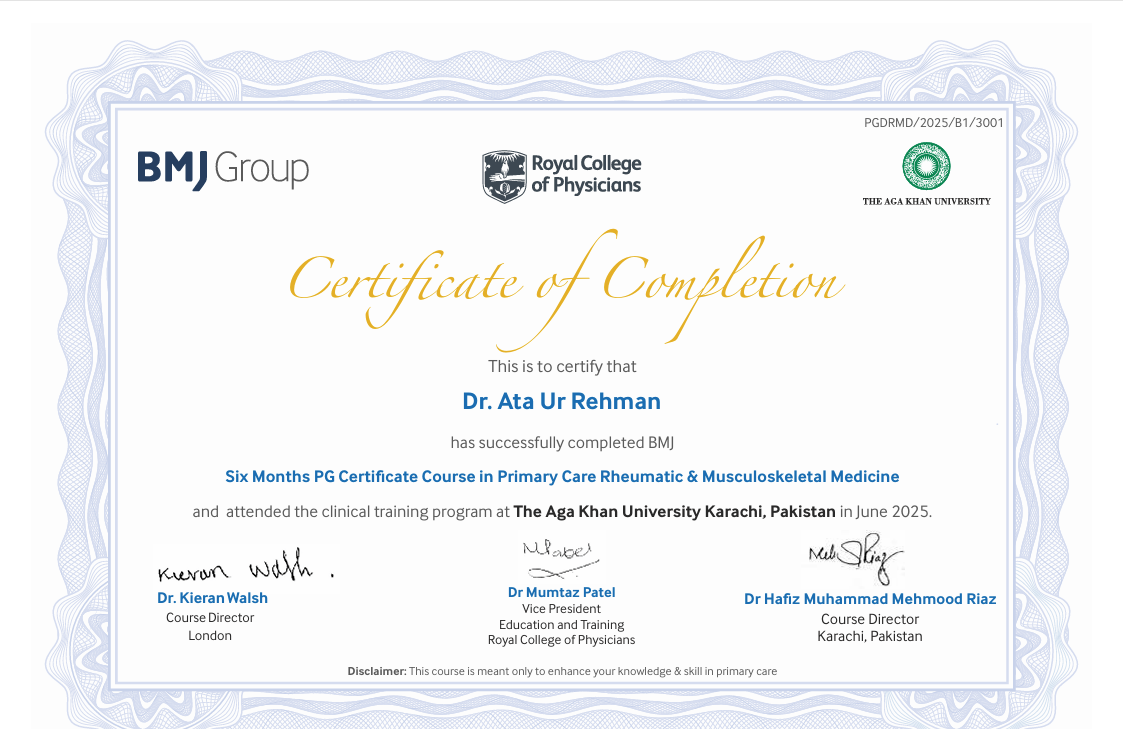
Get certified and get ahead in your career
Start Learning today and get a verified shareable certificate on course completion to showcase your skills & expertise.
Get Started Now
Start Learning today and get a verified shareable certificate
on course completion to showcase your skills & expertise.